

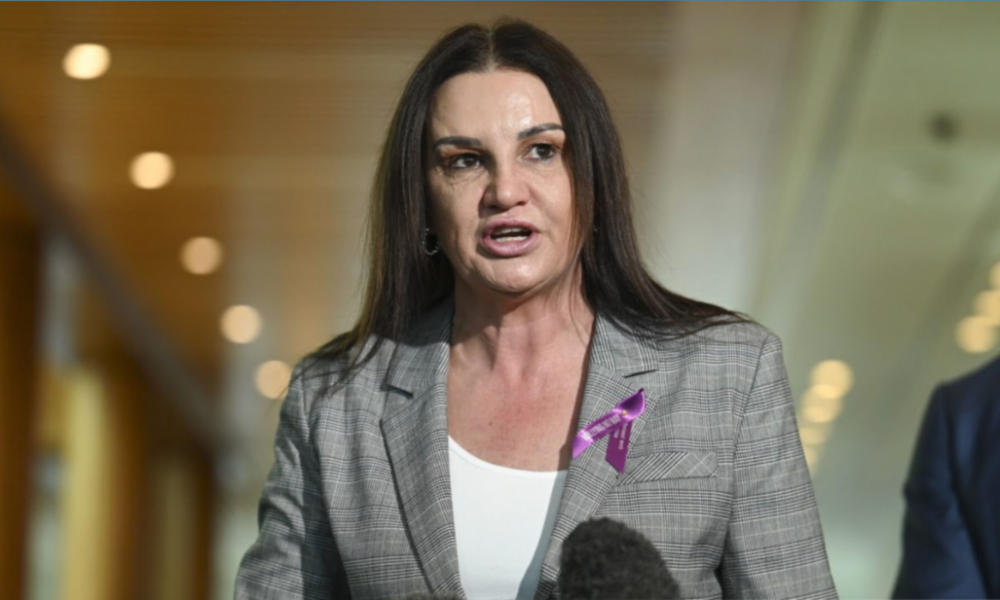
Jacqui Lambie has once again found herself at the center of Australia’s political spotlight. This time, the independent senator from Tasmania has spoken out against the influence of major tech companies and social media algorithms.
Advertisement
The issue arose during a discussion of new regulations designed to give Australians more control over how Facebook, Instagram, TikTok, and other platforms curate their feeds.
Lambie spoke in no uncertain terms: in her words, she’s had “enough of Big Tech.”
Today, social media platforms analyze users’ behavior—videos watched, reactions, follows, and other signals—and then automatically curate the posts that a person will see next.
The Australian government has proposed giving users the option to opt out of this kind of personalization.
However, Lambie believes that this is not enough.
She advocates a stricter approach: personalized recommendations should be included only after the user has given their explicit consent.
In her view, it is the individual—not the tech company—who should decide how their news feed is curated.
Lambie’s emotional statement sparked the most discussion. Speaking about the tech giants, she declared that it was time for the government to effectively “put Big Tech on a leash.”
Behind these harsh words lies a more serious debate.
Social media algorithms can influence what news, political content, and videos a user sees every day. The more a person interacts with certain content, the more similar posts the system can recommend to them.
The impact of such mechanisms on young users is a particular cause for concern.
Industry representatives believe that algorithms make social media more user-friendly by helping people find content that interests them.
Critics counter that user-friendliness should not deprive users of control over their own information environment.
Critics argue that convenience should not deprive users of control over their own information environment.
This is precisely where Lambie’s stance is particularly firm: she wants the use of a personalized algorithm to be a conscious choice, not a default setting.
Since this is still a policy proposal, the specific rules may still change.
But Lambie’s remarks show that the debate over social media in Australia is entering a new phase.
Previously, the focus was on what kind of content was posted on these platforms. Now, politicians are increasingly asking a different question: Who should decide what a user sees next—an algorithm or the user themselves?
Jacqui Lambie has already given her answer. In her view, the user should have the final say.