

Home Uncategorized
Category:

Uncategorized

Advertisement

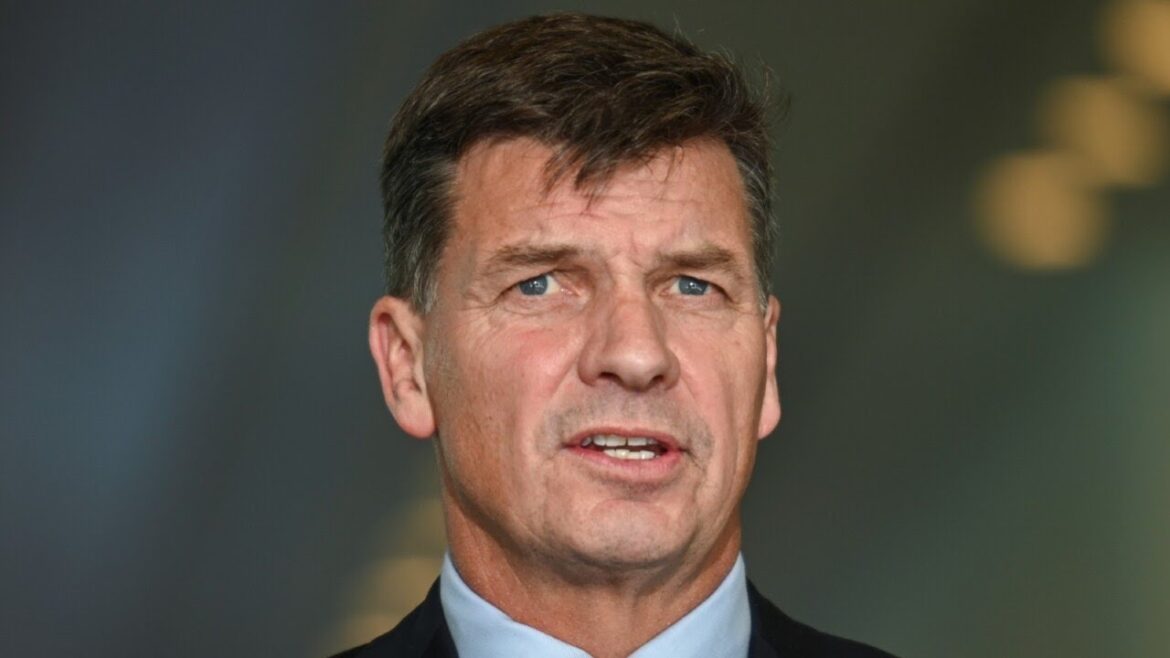
Just a few months ago, Angus Taylor faced a completely different challenge.

Following the change of leadership in the Liberal Party in February 2026, he was entrusted with steering the party through one of the most challenging periods in its modern history. Taylor defeated Sussan Ley in the leadership vote and declared that the party must refocus on Australians’ standard of living and rebuilding voters’ trust.

However, a few months later, the situation proved to be far more complicated than many could have anticipated.

The latest poll figures, internal discussions within the Liberals and growing competition from the right have presented the new leader with a test that could determine the future direction of the entire party.

Figures That Are Hard to Ignore

At the end of July, the results of the Guardian Essential poll were published, showing a marked decline in Angus Taylor’s personal approval rating.

His approval rating has fallen, whilst disapproval of his performance has risen. At the same time, the Liberal Party continues to seek ways to win back voters, some of whom are increasingly looking to Pauline Hanson’s One Nation as an alternative.

For a politician who took the helm of the party with a promise to change its direction, such figures inevitably attract attention.

But the story becomes even more interesting if we look back just a few months.

The Decision That Changed Taylor’s Career

On 11 February, Angus Taylor took one of the most significant steps of his entire political career — he stepped down from the front bench of the opposition.

Explaining his decision, Taylor stated that the Liberal Party was in its worst position since its foundation in 1944 and that Sussan Ley was no longer able to lead it as the situation demanded.

Two days later, there was a change in leadership.

Taylor took over as leader, and with it came the responsibility of rebuilding the party.

What initially looked like the start of a new political era quickly turned into a test of the new leader’s ability to hold together the various sections of the Liberal electorate.

Now the Main Problem Has Come from the Right

A particularly tricky issue for Taylor has been the party’s stance on One Nation.

Some conservative voters, whom the Liberals would like to win back, see Pauline Hanson’s party as an alternative. But moving too far to the right could simultaneously complicate the battle for moderate voters.

In June, Taylor categorically rejected the idea of striking a deal with One Nation to split constituencies in the next federal election.

At the end of July, he was forced to respond to the issue once again following a proposal by a Liberal senator to consider the possibility of a future coalition with One Nation.

Taylor once again distanced himself from such a scenario.

This creates a politically tricky situation: he needs to win back voters who are defecting to One Nation, without turning the Liberal Party into a carbon copy of his rival.

And Yet Taylor Continues to Shape His Own Agenda

Despite the pressure, there is no reason to suggest that his political career is coming to an end.

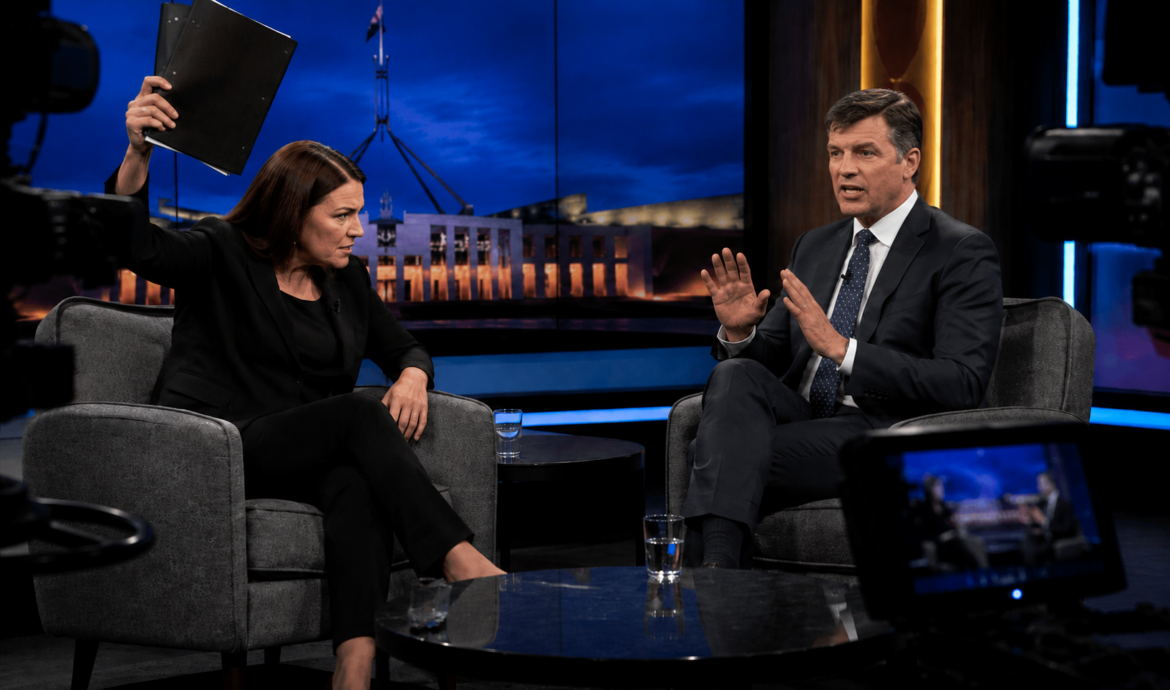
On the contrary, Taylor is actively seeking to set out an economic agenda that offers an alternative to the government’s.

In his response to the federal budget, he proposed indexing tax thresholds in line with inflation, starting with the two lowest tax brackets for workers earning less than 135,000 Australian dollars.

He later outlined broader political ‘battle lines’, opposing Labor’s changes to negative gearing, capital gains tax and trusts. He also continued to advocate a tougher stance on migration and public spending.

And right now, Taylor is involved in negotiations with the Albanese government on reforming the rules on gambling and betting advertising. This is one of the most recent political developments involving him as of 10 August.

That is why ‘We’ll Miss You’ Does Not Yet Reflect Reality

No tragic event has befallen Angus Taylor. He has not announced his retirement from politics and continues to fulfil his duties as Leader of the Opposition.

But current events provide ample grounds for a far more interesting political story.

In the space of just a few months, Taylor has gone from stepping down from the front bench and vying for leadership to having to answer an extremely uncomfortable question himself: can the new course of action halt the decline in support for the Liberals?

The latest polls show just how serious this challenge has become.

That is precisely why the coming months may prove decisive not only for Angus Taylor himself, but also for the future direction of the Liberal Party of Australia.

That said, I would not use phrases such as ‘tragic news broke 20 minutes ago’ or ‘sad news, unfortunately, it’s true’ literally: at present, they would refer to an event that has not taken place. The safest approach for this article would be, for example, ‘The latest news about Angus Taylor has raised new questions about his future’ — the intrigue remains, but the landing page does indeed back up the headline.

I can also keep an eye on Angus Taylor and let you know if any major news emerges regarding his resignation, leadership or a crisis within the party.

Advertisement

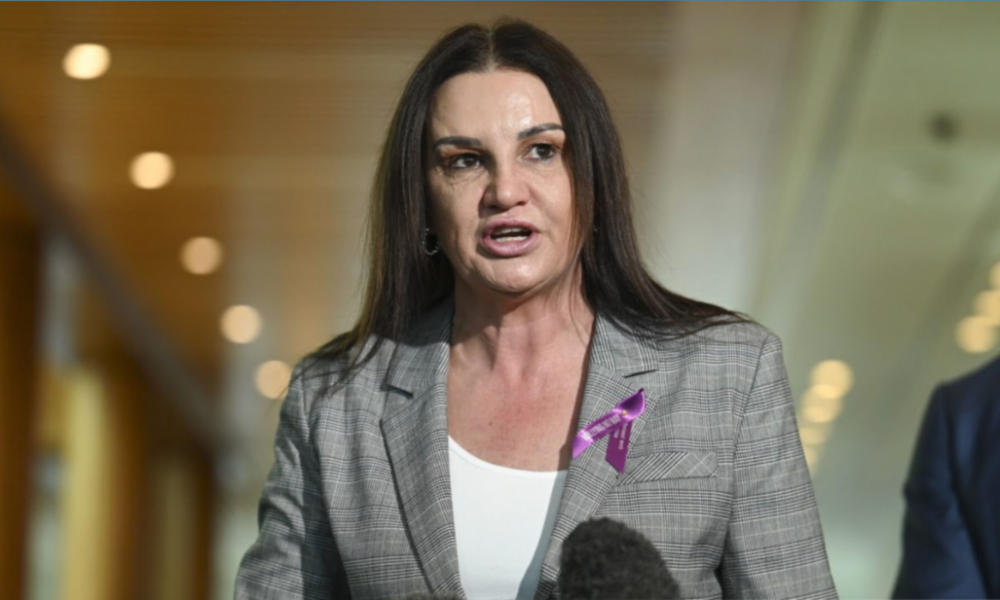
In Australian politics, Jacqui Lambie has long been a figure who is hard to miss. Her outspoken parliamentary speeches, her campaigns in support of veterans and her willingness to take on both the government and the opposition have made the Tasmanian senator one of the country’s most recognisable independent politicians.

But now there has been a new twist in Lambie’s story.

After many years in federal politics, she has publicly suggested that her current term in the Senate may be her last.

That is precisely why the question of what Jacqui Lambie’s political legacy will be is gradually taking on a whole new significance.

Another Six Years — And Then Everything Could Change

Ahead of the 2025 federal election, Lambie stated that, should she be re-elected, the next term would be her last.

Her reasoning was quite simple: another full term would mean six years of intense parliamentary work, and by the end of it she would be around 60 years old. She also acknowledged just how gruelling such work can be.

However, first she had to retain her seat.

The vote count in Tasmania proved to be a close one, and the final result was not known until several weeks after the federal election. At the end of May 2025, the Australian Electoral Commission confirmed Lambie’s re-election to the Senate.

Thus, her political career is not yet over. On the contrary, she has another long parliamentary term ahead of her.

But for the first time, this story has reached a quite definite, presumed conclusion.

Years of Political Struggle Lie Behind This Decision

Lambie’s journey in Canberra has never been a smooth one.

She was first elected as a senator for Tasmania in 2013. She later founded her own political group – the Jacqui Lambie Network – and, after a hiatus, returned to the federal Senate in 2019. Today, she continues to represent Tasmania and leads the JLN in the Senate.

During this time, the party itself has also undergone significant changes.

In 2024, Senator Tammy Tyrrell left the JLN following a disagreement with the leadership. Later, a conflict arose within the Tasmanian Parliament: two of the three JLN MPs elected – Miriam Beswick and Rebekah Pentland – were expelled from the party.

These events posed a difficult question for the small political organisation: to what extent is its future directly linked to the personality of its founder?

Meanwhile, Lambie Continues to Do What She Has Been Doing for Years

Talk of this being her final term does not mean that the senator has stepped back from active politics.

One of the areas in which she has been most consistent is the welfare of serving personnel and veterans.

In March 2026, Lambie levelled serious allegations against the support system for female veterans who had been subjected to sexual violence whilst serving overseas. She claimed that some survivors had not received adequate support from the government and the Australian Defence Force. The issue was raised directly in the Senate.

This is not new political territory for Lambie. She has devoted a significant part of her parliamentary career to veterans’ issues.

So It Is Too Early to Say ‘We Will Remember You’

Jacqui Lambie has not disappeared from Australian politics.

Official parliamentary records confirm that she continues to hold her seat as a senator for Tasmania, and her re-election secures her another six-year term.

But Lambie’s statement that this term will be her last does indeed allow us to view her career in a different light even now.

The politician, who began her federal career more than ten years ago, now faces the task of deciding which issues will take centre stage during the final part of her time in Canberra.

And if she does indeed follow through on her intention not to stand for re-election, the end of this term will mark the conclusion of one of the most unusual political stories in modern Australian history.

There is still plenty of time before then, however — and, judging by her ongoing speeches in the Senate, Jacqui Lambie has no intention whatsoever of letting it pass unnoticed.

An important point regarding advertising headlines: of the four suggested options, those containing ‘17 minutes ago’ are the most problematic — they create a false sense of urgency. ‘We’ll remember you’ can also easily be interpreted as news of a death or departure. For Revcontent, it’s safer to maintain the intrigue, but to link it to Lambie’s actual decision regarding the deadline.

Advertisement

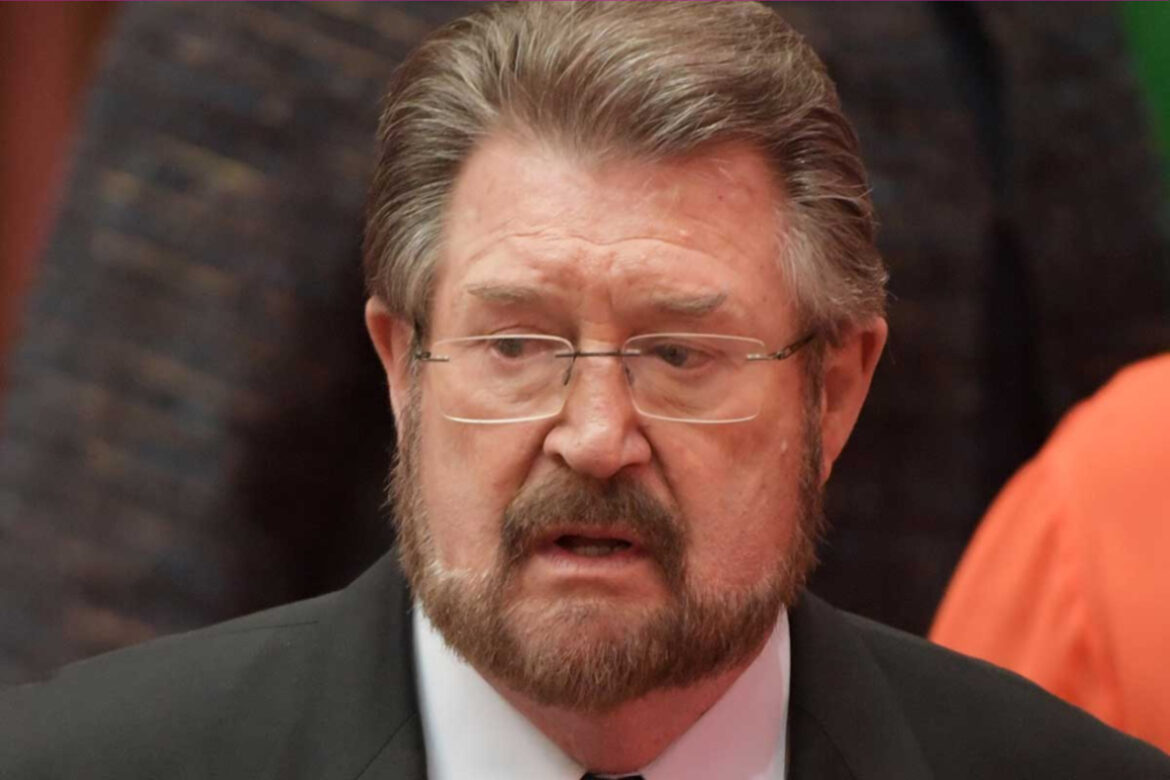
For decades, Derryn Hinch has held a special place in Australian journalism. He was known as the ‘Human Headline’ for his ability to draw attention to issues that other media outlets often overlooked. Over the course of more than sixty years in the profession, he has worked as a newspaper reporter, television presenter, radio commentator, author and federal senator.

This is precisely why any news associated with his name invariably attracted widespread public interest.

A Journalist Who Often Found Himself at the Centre of Controversy

Hinch’s career was never uneventful. He openly criticised the authorities’ decisions, advocated for tougher legislation against sex offenders, and repeatedly stated that the public interest was sometimes more important than the usual rules governing the media.

It was precisely because of such principles that he was found guilty of contempt of court on several occasions after breaching court injunctions prohibiting the publication of information. These incidents became some of the most talked-about in the history of Australian journalism and are still regarded as an example of the delicate balance between freedom of speech and the requirements of the law.

From Television to Politics

In 2015, Derryn Hinch founded his own political party — Derryn Hinch’s Justice Party — and just one year later was elected as a senator for the state of Victoria.

Whilst serving in parliament, he continued to address the issues he had been raising for many years as a journalist: criminal law reform, the protection of crime victims, parole and transparency in the judicial system.

Although his term as a senator lasted only one parliamentary session, his initiatives regularly became the subject of public debate.

Why His Speeches Always Attracted Attention

Colleagues and political commentators noted that Hinch rarely adhered to conventional political rhetoric. He preferred to speak plainly, often drawing on examples from his own experience as a journalist.

This style made his interviews, parliamentary speeches and television commentaries standout events on the news agenda, regardless of whether viewers agreed with him or not.

A Legacy That Continues to Be Discussed

In July 2026, it was announced that Derryn Hinch had died at the age of 82 following a long battle with ill health. His passing prompted numerous tributes from journalists, politicians and public figures, many of whom highlighted his courage, independence and immense influence on the Australian media.

Over the course of his career, Hinch has become one of the most recognisable figures in the country’s public life. To some, he was an uncompromising journalist; to others, a controversial public figure; yet virtually no one disputes that his work has had a significant impact on the development of modern Australian journalism and public debate.

Advertisement

Why Jacqui Lambie and Angus Taylor Have Different Views on Australia’s Economic Priorities

Political debates rarely boil down to a simple dispute over numbers. More often than not, they reflect differing views on how the country should develop and which decisions will yield results in the long term.

That is precisely why the latest public statements by Jacqui Lambie and Angus Taylor have once again drawn attention to issues that remain relevant to millions of Australians.

Despite their differing political views, both regularly address topics such as the cost of living, government spending, tax policy, and the business climate. It is precisely these issues that are now central to the discussion of Australia’s economic future.

The Economy as the Main Political Issue

In recent years, the economic agenda has shifted significantly.

Whereas the focus used to be on growth rates and macroeconomic indicators, today the conversation increasingly centers on household budgets, housing costs, food prices, utility bills, and access to credit.

In this context, every public statement by leading politicians inevitably becomes part of a broader discussion.

Jacqui Lambie regularly highlights how economic decisions affect the lives of ordinary citizens, veterans, and residents of regional areas.

Angus Taylor, for his part, focuses on issues of productivity, government spending, business support, and the long-term sustainability of the economy.

Two Approaches to One Problem

Although politicians’ assessments of the current situation differ, both agree on the need to seek solutions that can ensure stability in the future.

Some believe that the main priority remains reducing the financial burden on families and improving the effectiveness of government programs.

Others emphasize creating conditions for economic growth, investment, and private-sector development.

It is precisely this difference in approaches that continues to shape the political debate.

Why Interest in This Topic Remains Strong

Economic issues remain one of the most widely discussed topics in the country.

Any changes related to taxes, government spending, or the cost of living quickly become the focus of public attention, as they affect virtually every family.

Therefore, politicians’ comments are increasingly viewed not only as part of parliamentary debates but also as a reflection of differing views on Australia’s future development.

What This Discussion Reveals

Discussions of economic policy rarely end after a single speech or the passage of the latest budget.

On the contrary, it continues as new data emerges, the economy changes, and new initiatives are introduced.

That is precisely why the statements by Jacqui Lambie and Angus Taylor continue to generate interest—not so much because of political differences, but because they raise issues that directly affect the lives of millions of Australians.

Today, economic policy remains one of the main topics on the public agenda, and differing views on its direction are part of a broader conversation about the country’s future.


Advertisement

Our Company

Silent Basin Pty Ltd

16-18 Waltham St, Artarmon NSW 2064, Australia

+61402793151

[email protected]

Disclaimer

The information published on this blog is intended for general informational purposes only. We do not guarantee the accuracy, completeness, or reliability of any content. Any use of the information provided on this website is at your own discretion.

All rights reserved. 2026